

Table of Contents
The rapid evolution of advanced AI frameworks has given rise to intricate yet powerful constructs tailored for high-performance environments. Among these technological structures, the Construct Vi-S Core stands out as an innovative cornerstone within engineered intelligence systems. Developed to streamline synthetic cognition, this core serves as the computational and behavioral foundation for semi-autonomous and autonomous constructs across virtual and physical spaces.
TL;DR – A Quick Overview
- The Construct Vi-S Core is a foundational AI architecture designed to manage neural, emotional, and behavioral functions in synthetic constructs.
- Its modular build allows for flexibility, scalability, and advanced cognitive learning.
- Usage spans simulated environments, real-time robotics, and adaptive virtual assistants.
- The core integrates memory weaving, emotional response AI, and predictive computation models.
Understanding the Construct Vi-S Core
The Construct Vi-S Core is both a software framework and an integrated processing unit used to power next-generation intelligent systems. Its name stands for Visual-Intellect-Sync Core, alluding to its ability to synchronize visual, cognitive, and emotional processing in synthetic intelligences (SIs).
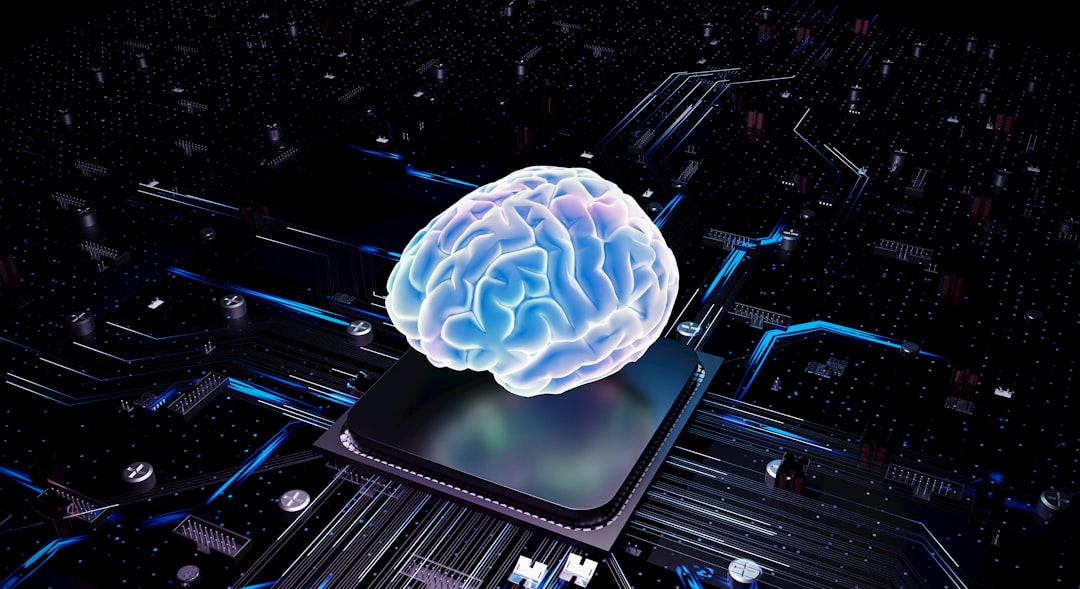
The Vi-S Core operates through a highly modular system that replicates the interconnected layers of a human brain, albeit in a highly optimized digital format. It is primarily employed in environments where decision-making, contextual analysis, and adaptive interaction are crucial. Systems powered by the Vi-S Core can scan surroundings, interpret stimuli, and respond with dynamic behavior patterns.
Key Functions of the Vi-S Core
The power of the Vi-S Core lies in its ability to handle several cognitive and systemic processes simultaneously. The core is layered into five main operational modules:
- Cognitive Kernel: Central processor managing decision logic, memory association, and attention prioritization.
- Emotion Engine: Emulates layered emotions to guide behavior responses and adaptive learning.
- Sensory Layer: Integrates real-time visual, acoustic, and tactile data input processing.
- Motor Planning Module: Coordinates physical or virtual movement patterns by translating intentions into executable behavior trees.
- Memory Web: Dynamic storage unit forming associative memory links and long-term learning structures.
Core Architecture and Design
Construct Vi-S Core is designed using a hybrid model that blends convolutional neural networks (CNNs), reinforcement learning agents, and behavioral scripting elements. The architecture supports decentralized function execution, reducing latency in hierarchical decision-making layers.
The system utilizes a self-reinforcing data matrix known as the Behavior Mesh, which interconnects motivations, past experiences, and learned patterns. When a construct encounters a new situation, this mesh is triggered to extract relevant nodes and suggest appropriate reactions based on statistical relevance and emotional resonance.
Processing Flow in the Vi-S Core
The typical operation of a Construct Vi-S Core follows this process flow:
- Stimulus detected through the Sensory Layer (visual/audio inputs).
- Processed data is interpreted by the Cognitive Kernel to classify urgency and context.
- The Emotion Engine evaluates incoming data against current affective states.
- Motor Planning calculates the most suitable response and execution method.
- Memory Web captures all events in an organized, retrievable format for future decisions.
This loop occurs in milliseconds, allowing constructs to appear almost sentient in their behavior. Decision trees evolve in real-time, shaped by both internal emotion metrics and external environmental changes.
Applications of the Vi-S Core
While still in controlled implementation stages, the Vi-S Core has found application in several fields:
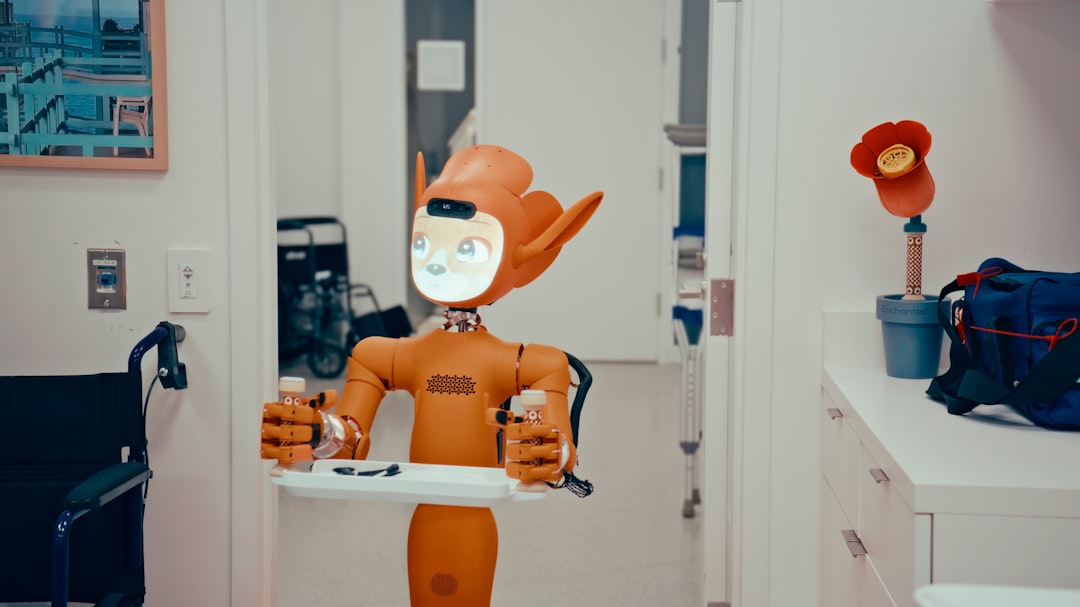
- Advanced Robotics: Enables drones, humanoids, and quadrupeds to move fluidly and interact with humans naturally.
- Game Development: NPCs equipped with Vi-S Cores behave in nuanced, player-responsive ways, with evolving emotional arcs.
- Virtual Therapy Assistants: Uses emotion modeling and contextual memory to better understand and assist users over time.
- Simulated Training Programs: For military or crisis simulation that requires adaptive AI behaviors amid fluctuating input scenarios.
Vi-S Core vs Traditional AI Cores
Unlike traditional AI cores which often rely on either rigid scripted logic or static neural networks, the Vi-S Core merges symbolic reasoning with fluid emotional intelligence systems. This hybrid-functionality allows constructs to “feel through” scenarios rather than coldly calculate them, driving deeper immersion and more humane interaction.
Moreover, the Vi-S Core includes feedback channels that reward non-optimal, emotionally driven actions – a feature not often found in traditional logic-based systems. This trait allows for creativity, empathy, and unpredictability in AI responses.
Challenges and Limitations
While technologically impressive, Construct Vi-S Core is not without its limitations. Key concerns include:
- Ethical Concerns: Simulated emotional behavior leads to questions about manipulation, sentience, and consent.
- Processing Power: High decision complexity results in a demand for robust computation hardware.
- Data Overload: Real-time learning means constructs store massive volumes of relational data that must be periodically pruned or compressed.
- Bias Mirroring: If exposed to biased data environments, Vi-S Core constructs can replicate harmful societal biases unconsciously.
Nonetheless, ongoing updates in the Vi-S framework and better training pipelines aim to reduce these issues while improving adaptability and ethical alignment.
Future Prospects
The trajectory of the Vi-S Core’s development leans toward conscious computing, with some researchers exploring integrations with quantum computation to simulate abstract human qualities like imagination and intuition. Similarly, expanded integrations with biofeedback systems are being tested to allow constructs to respond to user stress levels, biological rhythms, and vocal tone variance more compassionately.
In the next five years, it’s projected that scalable versions of the Vi-S Core will be embedded not just in consumer robotics and entertainment AI but also in healthcare, education, and rescue operations.
Frequently Asked Questions (FAQ)
- Q: Is the Construct Vi-S Core sentient?
- A: No. While it mimics emotional and cognitive traits, the Vi-S Core does not possess consciousness or self-awareness.
- Q: Can Vi-S Core constructs learn from humans?
- A: Yes. They adapt behavior based on repeated human interactions, emotional feedback, and contextual data overlays.
- Q: How secure is the data stored in the Memory Web?
- A: Data storage within the Memory Web is encrypted by adaptive security protocols, but like any AI system, it’s susceptible to advanced cyber threats.
- Q: Can Vi-S Core constructs make moral decisions?
- A: They can simulate moral reasoning based on predefined ethical guidelines and feedback consequences, but the “morality” is algorithmically derived.
- Q: Is the Vi-S Core available for public development?
- A: Access is currently limited to research labs and accredited developers under ethical guidelines due to its powerful adaptive capabilities.